Reading Grain Before You Cut
Tearout is not bad luck and it is not a dull blade. It is almost always a cut taken against the direction the fibres are running.
Furniture, timber and the work of the bench

Timber as a material that keeps moving: how boards are cut from the log, how they read at the bench, and how the seasons act on them afterwards.
Tearout is not bad luck and it is not a dull blade. It is almost always a cut taken against the direction the fibres are running.
Image
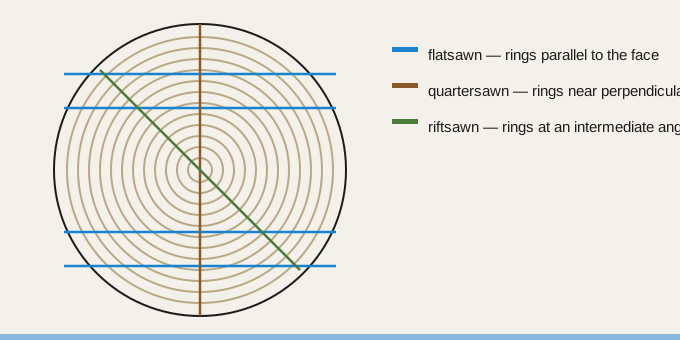
The same log yields boards that behave very differently, depending only on where in the round they were cut and at what angle the growth rings cross the end.
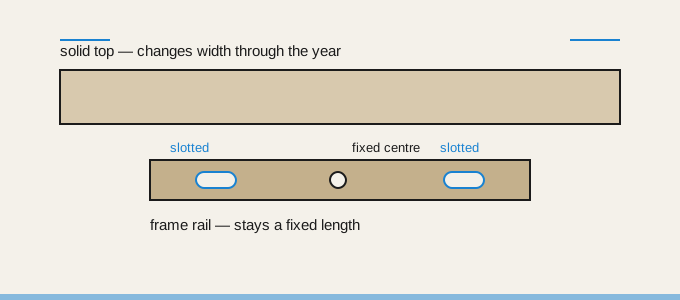
A board that has been dry for forty years still swells and shrinks every year. Furniture that ignores this destroys itself slowly and reliably.
The constraint in a small shop is rarely floor area. It is the length of clear space in front of and behind wherever the work is fed.
Status
Stock moved from an unheated outbuilding into a heated room needs weeks to settle, not days, and it needs air on every face while it does. Stickered in a stack with spacers between the layers, boards give up moisture evenly and stay flat. Piled solid on the floor they dry from the outside in, and the outer boards cup while the inner ones stay wet. Anything cut from the stack before it has stopped moving will be cut to a dimension that no longer exists a month later.
The two words describe how a tree reproduces, not how hard the timber is, and treating them as a hardness scale leads to some poor choices.