
Image
Hardware, Hinges and the Details
Hardware is the part of a piece of furniture that gets touched most often and chosen last. A handle is held several times a day for the life of the piece; a hinge governs whether a door feels solid or loose. Both are usually specified after the cabinet is built, from whatever is available in the right size, and the result is a good carcase with an indifferent interface.
Deciding earlier changes the construction, which is the real argument for it. A knife hinge needs a mortise in the carcase that has to be cut before assembly. A traditional butt hinge needs a leaf-thick recess and a stile wide enough to take the screws without splitting. A concealed cup hinge needs a large flat-bottomed hole and a door thick enough to contain it. Each of these is straightforward if planned and awkward if retrofitted.
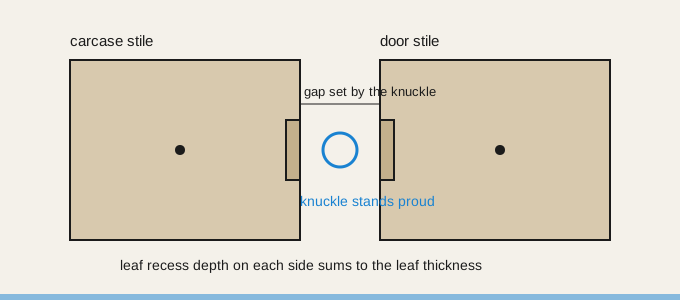
Fitting a butt hinge is mostly about the gap. The knuckle must stand proud of the surfaces by the amount of the intended gap, and the recess depth on each side must add up to the leaf thickness. Cut the recesses a fraction shallow and pare down: a hinge set too deep will bind the door against its opening on the hinge side, and the correction involves packing the recess, which is always visible afterwards.
Screws deserve more attention than they get. A clearance hole in the top piece and a pilot in the lower one lets the screw pull the parts together rather than jack them apart, and in hardwood a pilot is not optional. Slotted screws should have their slots aligned once everything is final, which sounds like fussiness and is the difference between hardware that looks fitted and hardware that looks installed.
Material matters where hardware meets certain timbers. Steel fastenings in oak will stain blue-black around the head as the tannin reacts with the iron, particularly if the piece ever gets damp, and the stain penetrates far enough that it cannot be sanded away. Brass, bronze or a suitable stainless avoids this entirely, and it is worth the substitution even where the fastening will never be seen.
The last consideration is repair. Hardware is the part of a piece most likely to need attention in fifty years, and it is worth fitting in a way that permits removal without damage: screws rather than adhesive, and recesses cut to a standard size rather than to one particular object.